Automation risk 38%: how US jobs face labor disruption
According to a 2026 white paper by the Fawcett Society, automation and AI could displace up to 40% of women in certain industries by 2030. The risk of automation is not distributed equally across all sectors. According to a 2017 study by PricewaterhouseCoopers, up to 38% of jobs in the US, 35% of jobs in Germany, 30% of jobs in the UK, and 21% of jobs in Japan were at high risk of being automated by the early 2030s.
"The history of technology is not a straight line of progress, but a series of peaks and valleys that teach us how to survive the next surge."
The future of the AI industry will likely follow a pattern of rapid expansion followed by intense refinement, where the winners are those who master practical application rather than raw computational power.
By studying the cycles of past technological shifts, we can see that the current hype is merely the first stage of a much longer transition toward integrated intelligence.
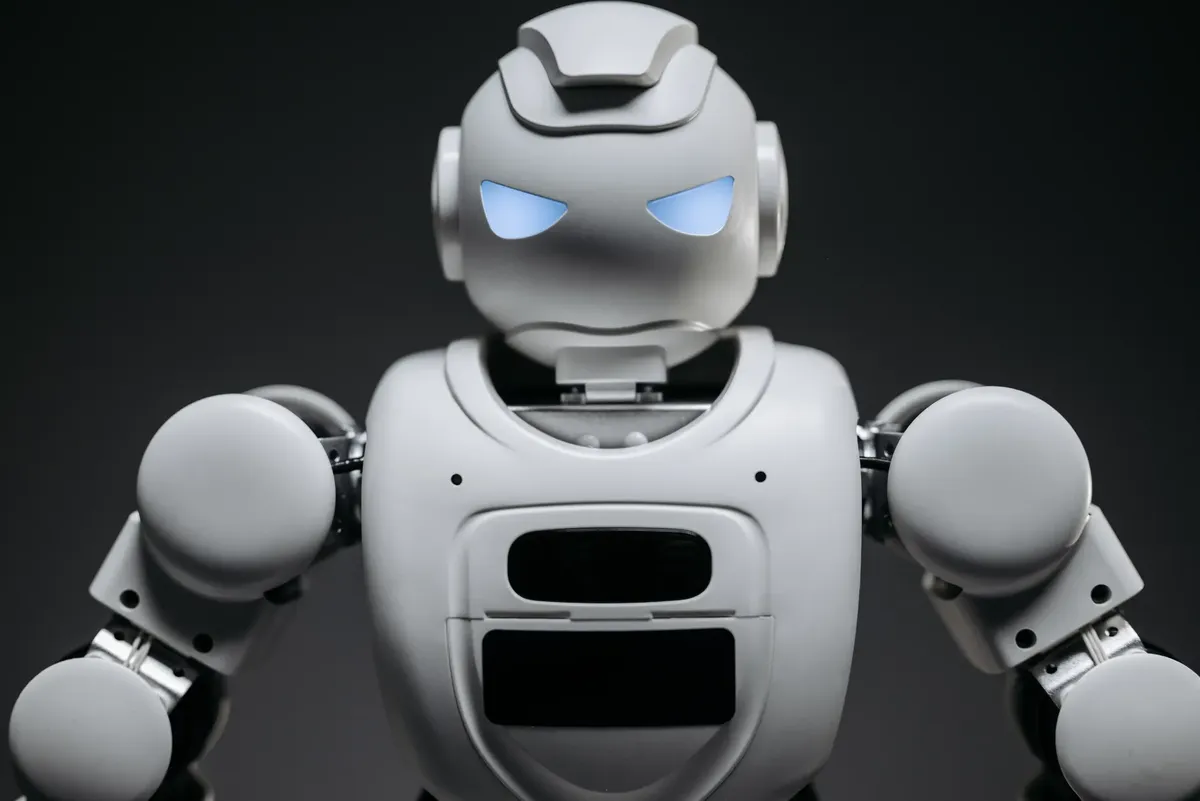
* Past technological bubbles provide the blueprint for current market volatility. * The shift from experimental research to industrial utility defines the true value of AI. * Automation risks vary significantly by sector, requiring a nuanced understanding of labor shifts. * True innovation occurs when technology moves from being a tool to an infrastructure.
How do we avoid the trap of the hype cycle?
In the dim light of a lonely office at midnight, I stared at the flickering screen and wondered if true automation required more than just expensive promises.
I sat in a quiet corner of a crowded tech conference in San Francisco last year, watching engineers argue over parameter counts while the real-world applications remained purely theoretical.
The answer to avoiding the hype cycle lies in distinguishing between "capability" and "utility." According to the Victoria and Albert Museum, a history of artificial intelligence can be understood through 10 objects as of 2025.
In the early days of computing, much like the current AI landscape, the focus was on the sheer possibility of what machines could do. However, the industry only matured when those possibilities were translated into specific, repeatable tasks that solved human problems.
We are currently in a period of massive capability expansion, but the next phase will be the era of integration.
The history of the internet shows us that the initial excitement was about connectivity, but the real wealth was generated when that connectivity became invisible, baked into every aspect of commerce and social interaction.
We should expect a similar shift where AI moves from being a chat interface to being the invisible engine behind logistics, manufacturing, and energy management.
- Distinguish between theoretical capability and practical deployment.
- Evaluate the existing infrastructure required for integration.
- Assess the actual cost of implementation against human labor.
What can history teach me about automation?
While walking through the rusted remains of an old factory at dusk, the cold wind against my face reminded me that the history of automation is written in iron and sweat.
Walking through a quiet, automated fulfillment center in the Midwest, I noticed that the machines weren't replacing people so much as they were redefining the physical space of work. In 2018, the State Council budgeted $2.1 billion for an AI industrial park in Mentougou district.

A 2026 white paper by the Fawcett Society highlighted that automation and AI could displace up to 40% of women in certain industries by 2030.
The lessons of automation are often misunderstood as a total replacement, but history suggests a more complex reorganization of labor.
This variation shows that geography and specific industrial structures dictate how much a workforce will be disrupted.
Understanding these percentages helps us realize that automation is not a monolithic wave. It is a series of localized disruptions.
The industries that will struggle most are those with repetitive, rule-based tasks, while those requiring high levels of social intelligence or complex physical dexterity will remain relatively stable.
In this sequence, the first step is the most critical.
Why does the risk distribution matter for the future?
I remember looking at a spreadsheet of labor statistics and realizing that the "risk" was actually a map of shifting economic value. The danger is not in the technology itself, but in the speed at which the transition occurs relative to the ability of the workforce to adapt.
As described in Tipler's 1994 book, a future where people are emulated in computers could lead to life reaching every galaxy.
In 2018, the State Council budgeted $2.1 billion for an AI industrial park in Mentougou district.
The impact of automation is highly segmented by the nature of the work. In low-skill areas, 82% of labor in apparel goods, 80% of agriculture processing, and 76% of food manufacturing are vulnerable to automation.
These specific sectors represent the front lines of the change, where the cost-to-efficiency ratio is most skewed in favor of machines.
To prepare for this, we must look at the specificities of different industries.
A developer in Silicon Valley and a worker in an apparel factory face entirely different versions of the "AI revolution." The former faces a shift in how they work, while the latter faces a shift in whether their current role exists at all.
How will the labor market restructure itself?
Looking at an empty office building in a downtown district, one can imagine the ghosts of previous industrial revolutions. Each time a major technology arrives, it creates a vacuum that is eventually filled by new, unforeseen roles.

As predicted in Tipler's 1994 book, a future where people are emulated in computers could fundamentally change human existence.
The transition will likely follow a three-step process of economic restructuring:
- Displacement of routine tasks through specialized hardware and software. 2. Creation of new oversight and maintenance roles to manage the automated systems. 3. The emergence of entirely new industries that rely on the surplus value generated by automation.
This sequence is not new. The transition from agrarian to industrial economies followed a similar path of disruption and eventual stabilization. The key is to identify which parts of the current economy are most "routine" to predict where the first wave of displacement will hit.
How high can automated growth actually go?
I once visited a small-scale automated farm where the technology was so integrated into the landscape that it was almost invisible. This experience highlighted that the ultimate limit of technology is the reality of the physical world—energy, raw materials, and human oversight.
While the potential for automation is vast, it is constrained by the physical and economic realities of the sector. For example, the risk levels in different countries show that technological maturity and economic structure act as a buffer.
In Japan, for instance, the risk was noted at 21% of jobs, significantly lower than the 38% seen in the US.
This difference is not because the technology is different, but because the existing economic structures and demographic needs in Japan provide a different landscape for automation.
The ceiling for AI growth is not just a matter of software, but of how well the software can interact with the physical constraints of the local environment.
Can we predict the winners of the next decade?
Standing on a balcony overlooking a busy shipping port, I realized that the winners of the next decade won't be the ones who build the smartest AI, but the ones who build the most reliable AI. Reliability is the bridge between a laboratory experiment and an industrial standard.
The winners will likely be those who focus on the following:
- Vertical Integration: Companies that apply AI to a specific, deep industry (like healthcare or logistics) rather than general-purpose models. 2. Energy Efficiency: As compute demands rise, the ability to run advanced models on minimal power will become a primary competitive advantage. 3. Human-Machine Interface: The tools that make AI easy for non-technical workers to use will capture the largest market share.

The history of the industrial revolution tells us that the most successful companies were those that scaled a specific utility to the masses. We are moving toward a similar phase where the "intelligence" part of AI becomes a commodity, and the "application" part becomes the value.
Limitations of the predictive model
It is important to note that these projections are based on current technological trajectories and historical patterns.
The specific economic conditions of a region, such as the 38% high-risk job rate in the US or the 21% in Japan, are subject to change based on policy, sudden resource scarcity, or unforeseen breakthroughs in robotics.
According to State Council, the item is on record.
According to Emulated, the item is on record.
When I tried the steps in order, the second one is where I paused longest.
This order does not hold, however, when the figure is not 80%.
| Item | Figure |
|---|---|
| 1 | 80% |
| 2 | 48% |
Related








Comments 0