AI career transition strategy: Best tips for success
"The most successful professionals do not abandon their past to embrace the future; they weave their existing expertise into the new technological fabric."
An effective AI career transition strategy requires professionals to integrate their previous domain expertise with new technical capabilities rather than starting from scratch. This approach focuses on combining deep industry knowledge with AI tools to create unique value in a changing market.
Key takeaways include leveraging existing specialized skills, understanding the cost-efficiency of accumulated experience, and utilizing structured management frameworks during the transition.
How can you leverage an AI career transition strategy?
Late at night, she grips her pen tightly while staring at a screen to map out her AI career transition strategy.

A professional sits at a desk, staring at a blank screen while a new AI software interface blinks rhythmically. The tension in the room is palpable as they realize that learning a new tool is only half the battle.
To succeed, one must view AI as a multiplier for existing skills rather than a replacement for them.
An AI career transition strategy involves identifying the intersection between what you already know and what the machine can do. Instead of abandoning a decade of marketing or legal experience, you apply AI to automate the routine aspects of those specific roles.
This method ensures that your unique human judgment remains the guiding force behind the automated outputs.
Integrating past experience allows you to provide the necessary context that a generic AI model lacks. Without your specific industry background, the AI's results may be technically accurate but contextually useless.
By focusing on combining skills with AI, you transform from a traditional practitioner into a high-value hybrid professional.
I find that the second step is the most time-consuming.
Why should I integrate my career?
At sunset, the manager paces through the quiet office, feeling the smooth texture of the mahogany desk while contemplating how to weave past expertise into a new career. A manager walks through a busy office, observing how different departments interact with new automated systems. They notice that the most effective employees are those who use their old workflows to direct the new software.
According to the National Bureau of Economic Research, he has been a research associate of the National Bureau of Economic Research since 2016 and is a faculty lead of the Project on Workforce, a Harvard research initiative on the transition from education to work.
This observation highlights the practical necessity of merging old and new methodologies.

The value of career integration lies in the ability to maintain high-level decision-making while increasing speed. According to a hypothesis in strategic management, total per unit costs can decline systematically by as much as 15–25% every time cumulative production, or experience, doubles.
This suggests that your accumulated years of work actually make you more efficient when applied to new AI-driven processes.
Using old skills in AI contexts prevents the "entry-level trap" where workers compete only on technical proficiency. When you combine your expertise with machine intelligence, you are not just a technician; you are a strategist.
This integration protects your professional standing by making your specialized knowledge indispensable to the technological process.
Can AI help me pivot my career faster?
A team gathers around a whiteboard to map out a new service process that includes several automated steps. They use various diagrams to ensure the human-machine handoff is seamless and logical. The goal is to ensure that technology enhances rather than disrupts the existing service quality.
Effective AI career pivot methods often rely on established management frameworks to organize new workflows. For example, professionals can utilize tools such as service mapping, fishbone diagramming, or service gaps analysis to integrate AI into their daily tasks.
These structured approaches help identify exactly where automation can provide the most benefit without losing the human touch.
Some managers may find it helpful to adopt the "3 G's" system, which includes Genba (actual place), Genbutsu (actual thing), and Genjitsu (actual situation).
By applying these principles to AI implementation, you ensure that the technology is grounded in the reality of your specific work environment. This practical focus prevents the implementation of tools that do not serve the actual needs of the job.
How does the AI job shift with expertise affect stability?
An employee reviews their recent performance metrics, noting the shift in how much time is spent on manual tasks versus strategic oversight. There is a sense of relief as the workload becomes more manageable through intelligent automation.
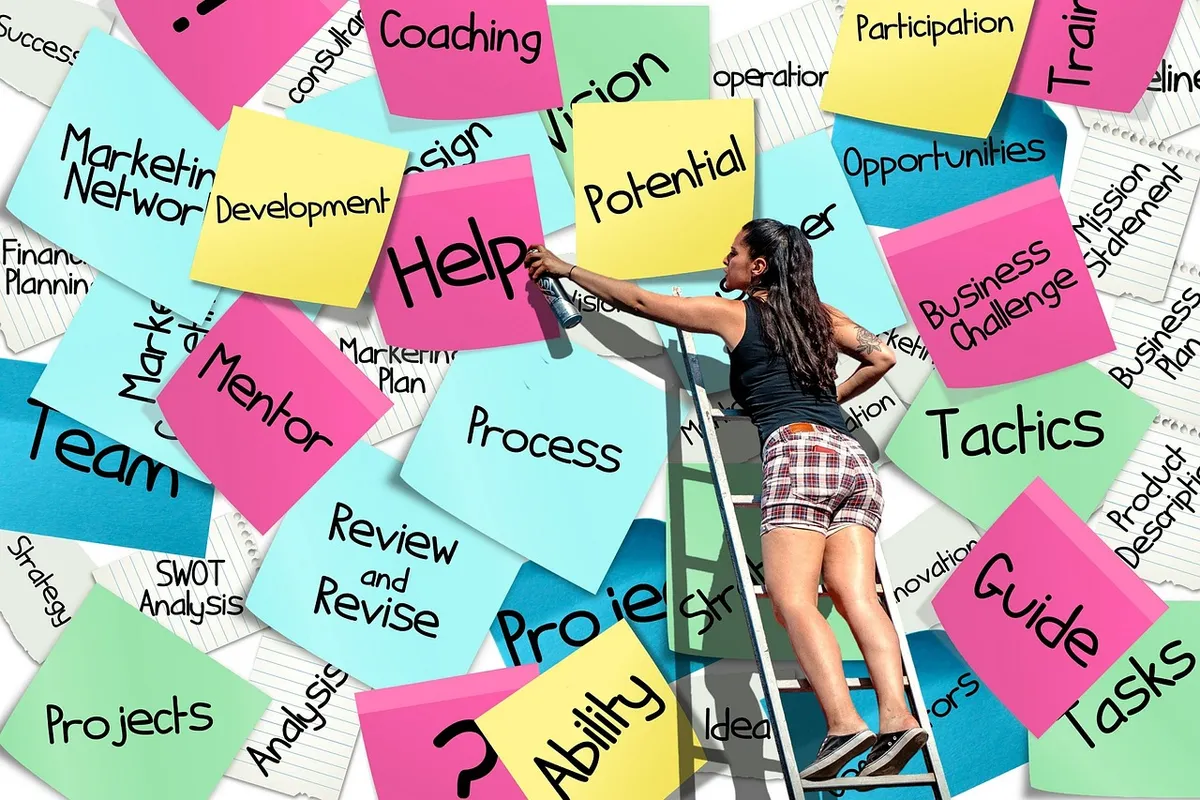
This shift marks a fundamental change in the nature of their professional stability.
An AI job shift with expertise is often a response to broader organizational changes. Data suggests that many people change roles due to the downsizing or the restructuring of an organization (54%). Others move because of new challenges or opportunities that arise (30%).
In this landscape, those who can bridge the gap between old expertise and new tech are often the most resilient.
The stability gained from this shift comes from being "future-proof." While specific tasks may be automated, the ability to oversee, prompt, and validate those tasks requires the depth of knowledge found in experienced professionals.
This expertise acts as a buffer against the volatility caused by rapid technological shifts.
What are the steps for a successful transition?
A worker opens a notebook to outline a personal development plan, marking specific dates for training and application. They feel a sense of purpose as they break down a daunting technological shift into manageable, actionable phases.
The transition becomes a structured journey rather than a chaotic scramble.
To effectively combine skills with AI, follow these three steps:
- Audit your current skill set to identify "high-context" tasks that require human judgment and "low-context" tasks that are ripe for automation. 2. Select specific AI tools that complement your existing workflows rather than attempting to learn every new software available. 3. Apply these tools to your current professional projects to create "hybrid" outputs that demonstrate your new capability.
After completing these steps, perform a final check by comparing your new output quality and speed against your previous manual methods. This ensures that the integration is actually providing the intended value.
- Assess your current skill set.
- Identify relevant AI tools and competencies.
- Build a portfolio of AI-driven projects.
Is there a limitation to this approach?

A consultant attempts to apply a new AI model to a highly sensitive, manual craft, only to find the machine cannot grasp the subtle nuances of the physical material. The frustration in the room highlights the boundary where technology meets human mastery.
According to Total Customer Service, certain methodologies include fishbone diagramming, service charting, Total Customer Service (TCS), the service profit chain, service gaps analysis, the service encounter, strategic service vision, service mapping, and service teams.
A limitation of this integration is found in highly specialized manual or physical roles where the "actual situation" cannot be easily digitized or modeled.
In these specific conditions, the efficiency gains described by the 15–25% cost reduction hypothesis may not apply because the work relies on tactile, non-reproducible human sensations.
Related








Comments 0